Sunday, December 15, 2013

Computational Science

As technology becomes more and more advanced, and concepts become more complex and abstract, the need to visualize all of these concepts and how they interact with certain parameters becomes harder as well. More variables come into play as the scope of researching or studying things like molecules widen to include not just overall structure but maybe even each individual structure as nucleus and electrons. Computational Science's goal is to use mathematical models and quantitative analysis to expand that scope and simulate on computers such interactions (Source). 

There are many branches of Computational Science, such as Biological Computation which as the name suggests focuses on biology systems. Defining what biological systems compute and the even bigger question -- how it is computed, are the fundamental principles to uncover from such research. As such, things like DNA and cells will need to be programmed, expanding our visual scope the two of the smallest units we know of in the body. Being the smallest unit also means there are going to be millions, maybe billions, of objects in the simulation, which is why, supposedly, computational science projects often require supercomputers according to wikipedia; and it wouldn't be surprising with so many complex objects. 

If such projects depend on supercomputers, it would seem they are bound to have hardware problems eventually. Or at the very least they will become limited by it until hardware issues like RAM processing speed can catch up with other hardware.

References:

Sunday, December 8, 2013

Computer Graphics

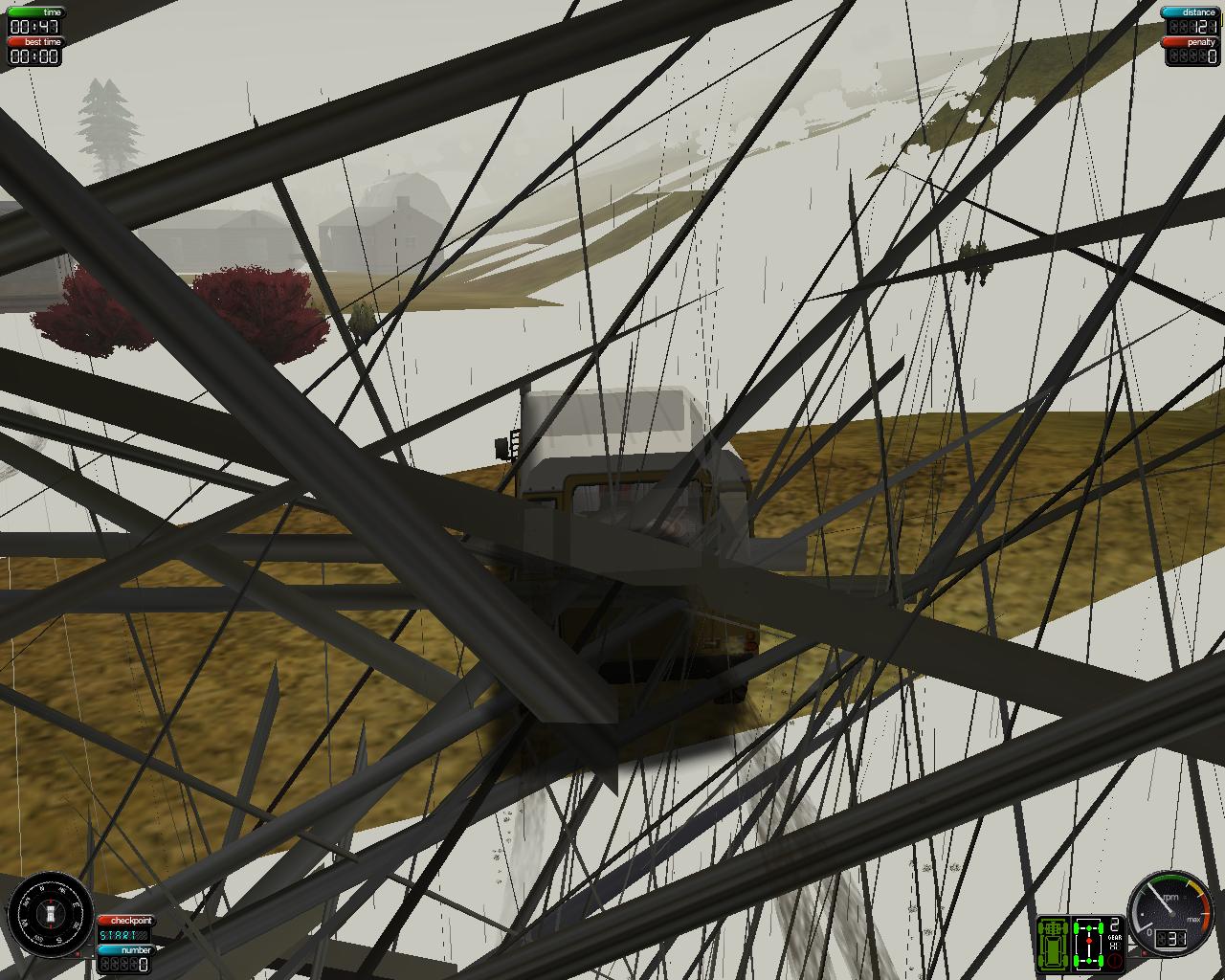
Personally, I have no idea what kind of algorithms are used to make graphics look clean, neat, organized, you know -- realistic, which have by all means improved drastically in the last decade. But, I have dabbled in using some software to get textures to appear on meshes in games like Skyrim and Oblivion. 

Texture
The textures themselves in this game uses a .dds format (Direct Draw Surface) that some versions of Adobe Photoshop support or the freeware Paint.NET
Mesh
whereas the meshes .nif (Notation Interchange File) which contains the shape of the object using many, many triangles and probably a lot more information that I'm not aware of. These are somewhat editable with another freeware NifSkope.


Anyways, how some algorithms help obtain that realism is simply making it easier to create or make edits to images that later get wrapped around the mesh, or in whatever way an algorithm gets the image to appear on the mesh and look neat. Clipping Algorithms help in making things look neat and in doing so realistic, clipping being "Any procedure which identifies that portion of a picture which is either inside or outside a region" (Source)


References
http://en.wikipedia.org/wiki/Clipping_(computer_graphics)
http://www.fotocraft.org.uk/images/screamer4x4/Screamer4x4_03.jpg

Sunday, December 1, 2013

Communication and Security: Network structures

How do our devices connect to a router? And then how does that router connect to the rest of the world? Questions that have come as side thoughts for split seconds and vanish, never focused on to be explored and understood -- part of the many things taken for granted. 

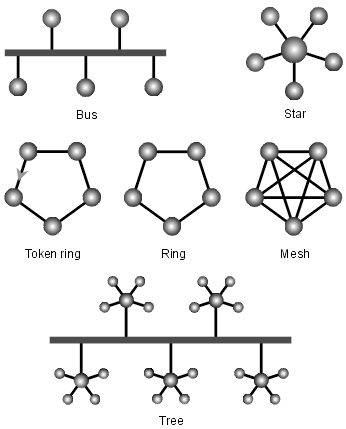
Conceptually there are typical layouts of network setup in homes, but in the end the result is that they're in communication with each other or have the ability to reach each other (source). 


Ethernet connections use the 'Bus' layout whereas Wireless LAN connections would be generally conceptualized with the 'Star' layout. in which the central node is the Wireless Access Point (WAP). WAPs may be integrated into the router itself, but are not necessarily. Regardless the access point's responsibility to is to connect to the router. 
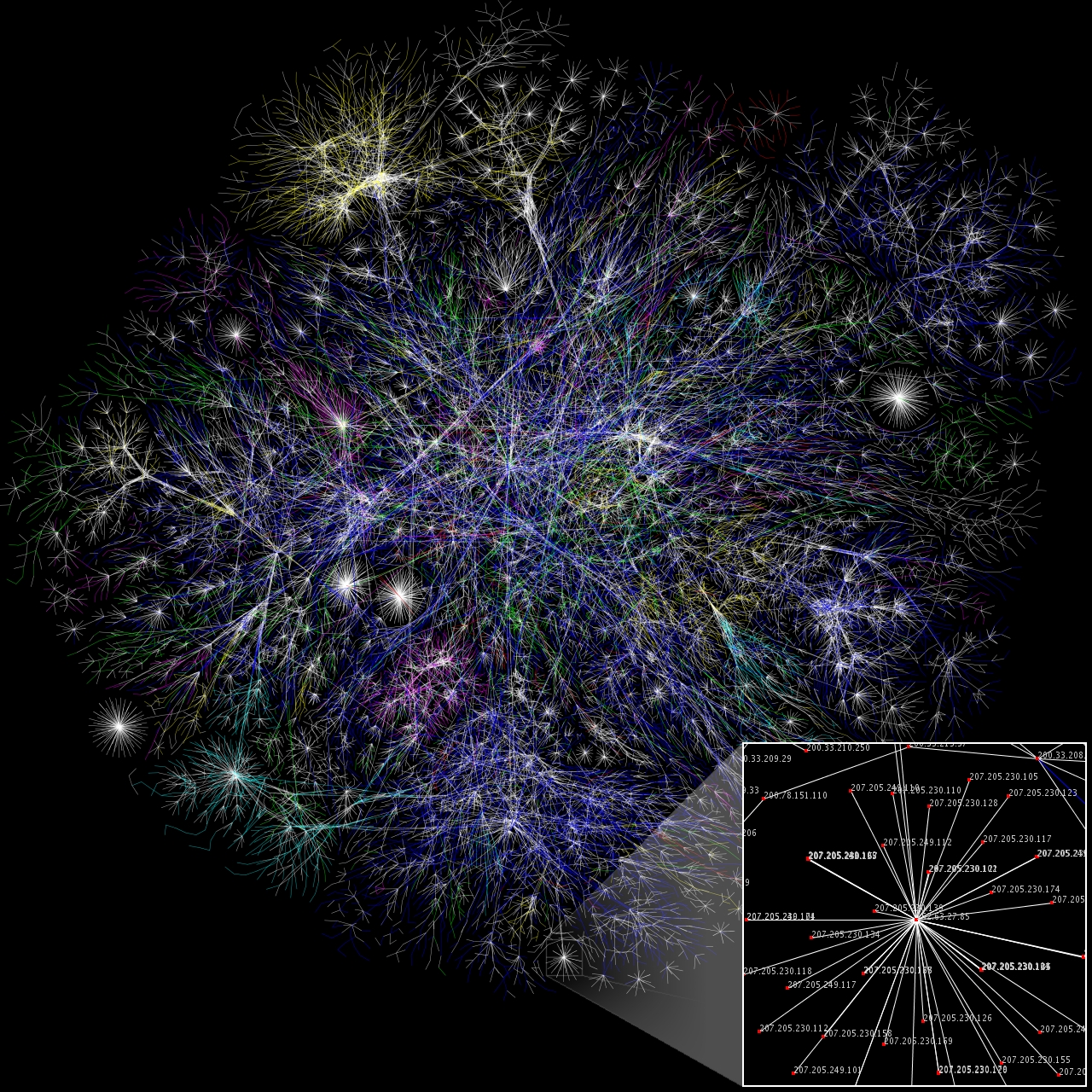
These layouts may also apply to the router whose responsibility is to determine where to forward data packets to other nodes or sub-networks -- as the internet can be seen as 1 enormous network. For network security, firewalls can be seen as the filter properties of each node. 
The vastness of the internet.

Yes, this is all quite summarized and general concepts, otherwise Network Security wouldn't be such a 'hot' job at the moment. At the very least I hope this is a starting point to asking more questions about how computer networks communicate and process data to one another. 

Saturday, November 30, 2013

Artificial Intelligence: The difference of seconds


Artificial intelligence, a solidified product in sci-fi; a growing fascination of reality, two points that need a bridge connecting them. At one end, it's like a complete man-made being capable of thought and learning -- growing. At the other end, we have things like chess solvers where even put on the most basic level beginners may have trouble beating the computer a.i. 
What is significant about someone who does not play chess getting beat by an a.i.? If we look more at how a.i.'s are built with a tree, then we can see how many possibilities the a.i. must consider even at the first level and how many a beginner will see, let alone consider. As the increase the difficulty of the computer a.i. it considers even more possibilities by going through more levels of the tree in the span of seconds, the difference between it being a beginner and masters. To simulate just how this would look on the chessboard itself, Thinking Machines 4 has a playable chess game while showing the a.i. considering its possibilities: here

We know that the a.i. for chess is not complete like that of checkers, so the extreme amount of possibilities shown in that simulation is not even finished shows just how powerful it is now and it's not even at the level writers have portrayed in the novels -- the bridge isn't complete yet.


Sunday, November 17, 2013

My CS History, Part 1: Creative Appeal

My first impression of Computer Science really had nothing to do with solving problems or what coding actually looks like. Really, it had nothing to do with logic, but the appeal of simply being capable of creation. I mean, other forms of art are capable of it too; however, something about computers was just more appealing or simply that everything that other forms of art can create can be translated into something digital. At the time I had thought it was a one way thing, but even when not so that fact makes the computer a sort of central hub. I suppose the seemingly endless possibilities it offered was most enticing.

But since I've been talking about art, the computer's biggest tool for that: Adobe Photoshop, right? And of course there are offshoots of it, but the point is that in one central place the computer can simulate the same effects as physically drawing or painting, etc. Also, even if it cannot do a certain thing that physically crafting can now, eventually it will. Whereas the reverse seems less likely, it is not particularly practical to find a way to recreate a custom effect on the computer in 'real' life.

Thursday, November 14, 2013

My CS History, Part 2: Reality Check

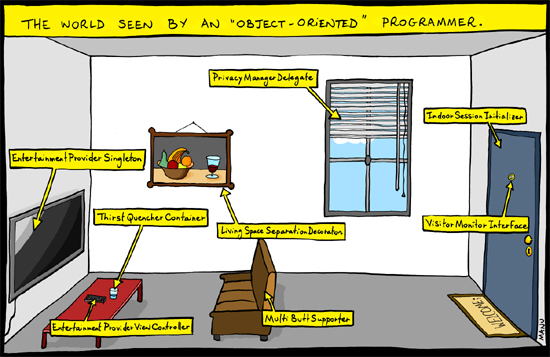
As I actually began to touch the surface of what Computer Science is having taken a few classes at San Jose State University, I realized that at the very least what they teach us in school is completely different how I imagined it to be. Programming wasn't the super mysterious and purely magical result giver, a lot of theory goes into it and design: data structures, hardware architectures, evolving coding languages. The languages I find to be most interesting as representations of how to essentially 'see' code in different ways. Since SJSU has a focus on Java, we 'see' pieces of code as interactions between objects or things. This, in some sense, affects data structures too. How code is represented and recognized often leads to how it can be organized. 
Essentially, school has filled in some of the mysteries of the 'black box' that computers were, along with it's 'black magic.' So while my history of Computer Science hasn't really been about Computer Science's history (like knowledge on what changed between generations of computer languages and why), this is a small snippet of what it has been for me. At the same time, I'd don't really mind; working with what is current and honing those skills mean more to me than potentially useful principles history may teach -- and I know myself well enough that studying history isn't an effective use of my own time as I don't approach it willingly.

Sunday, November 10, 2013

File Sharing: The Power Struggle.


File sharing, the simple act of downloading data (source). As a tool, simply revolutionary.


It gives people power and businesses are fighting to limit that power.
It makes sense too, in how our current society works; the economy and market puts value on products that people have put in work to create. I think the general idea of digital piracy would be taking the products that do require payment and distributing it freely for no payment. But, these products have fine prints as to what may be done with them and products are sometimes given away for free anyways -- what is the difference between that and piracy?

And why limit the ability to give?
The entertainment industry has been arguing that file sharing has put a huge wedge in their profits.
But, they wouldn't continue to huge these tools if they were not profiting from them. A study has shown that their profits remain healthy, which, really, should be expected (source) -- and people like their entertainment.
I think this goes beyond just money and legal rights. More of raw Power potential, and, yeah, sure money is power, but power is not just money. As we continue into this digital age, do we really expect people to use file sharing systems less? It'll be essential, a core to how society will run. Control over that is infinitely more powerful than have money.